About the Project
A Note from the Authors
This project began in earnest more than five years ago. But really, it started when we first met more than two decades ago. We are historians of Oklahoma and the American West. We attended graduate school in Oklahoma (one of us at Oklahoma State University and the other at the University of Oklahoma). We raised our families here. Our children are products of the Oklahoma public school system. And we are deeply invested in studying, preserving, and sharing the stories that make Oklahoma with broad public audiences. We both authored histories of our respective institutions where we have spent our careers educating Oklahoma students. We lamented the absence of scholarship on modern Oklahoma history, especially for our students who would go on to teach Oklahoma history as K-12 educators. Finally, we stopped lamenting and started writing. This project has been a collaboration not just between the two of us, but between us and numerous students, educators, and authors who have inspired us to write this book. And so, we find ourselves with many people to thank.
We have worked collaboratively with partners at historical associations, historical societies, cultural centers, and museums. We have worked with educators throughout the state seeking feedback in teacher workshops and sharing content and chapters guided by the Oklahoma Academic Standards. The advisory board for this project helped us set the tone for a state history that offers a deeper understanding of Oklahoma’s many histories.
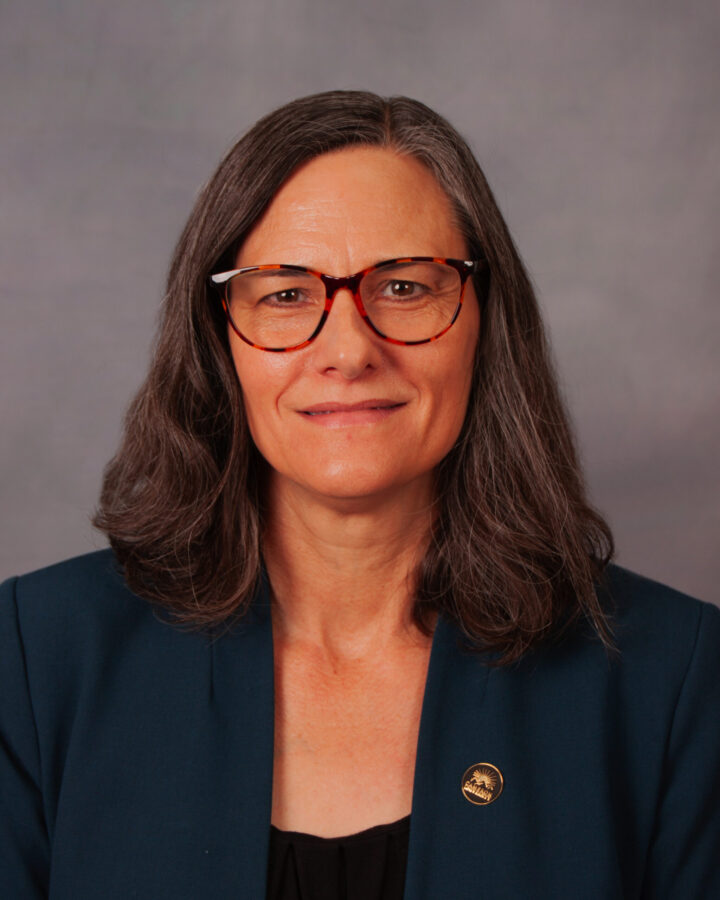
Sarah Eppler Janda, PhD
Lawton, Oklahoma
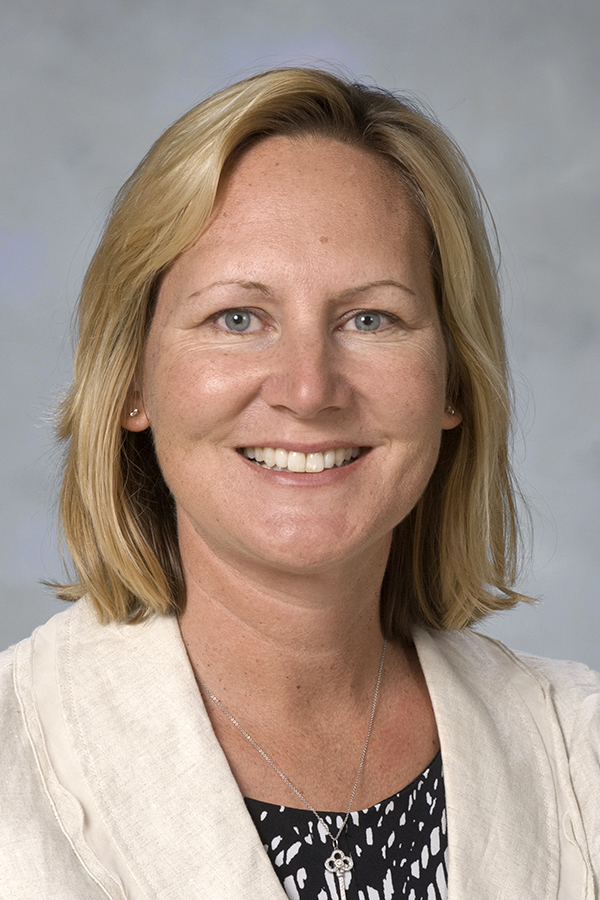
Patti Loughlin, PhD
Stillwater, Oklahoma
A Note from the Ancillary Developer
This textbook project represents the culmination of a lifelong passion for teaching and learning about Oklahoma history. Creating instructional supports for this exceptional textbook provided me the opportunity to explore our state’s complex, heartbreaking, and vibrant history more deeply—a history that continues to surprise and inspire me.
I offer heartfelt thanks to my boys, Mike, Guthrie, and Buddy, for their help with IT support, proofreading, and much-needed stress relief throughout the project. I am equally grateful to historians, authors, and colleagues Dr. Sarah Janda and Dr. Patti Loughlin, who invited me to join the team. Their contributions to the scholarship of Oklahoma history through this long-needed textbook are substantial and deeply appreciated.
This work would not have been possible without the support of the University of Central Oklahoma and the inspiration provided by the many students and fellow teachers with whom I have worked over the past three decades in Oklahoma social studies classrooms. Ms. Sandi Colby also provided immeasurable support in developing this project, and I am forever thankful for her help.
The ancillary materials presented here are designed to highlight the most engaging and meaningful aspects ofhistory education. I hope educators and students alike will find them helpful in exploring the past, present,and future of Oklahoma.
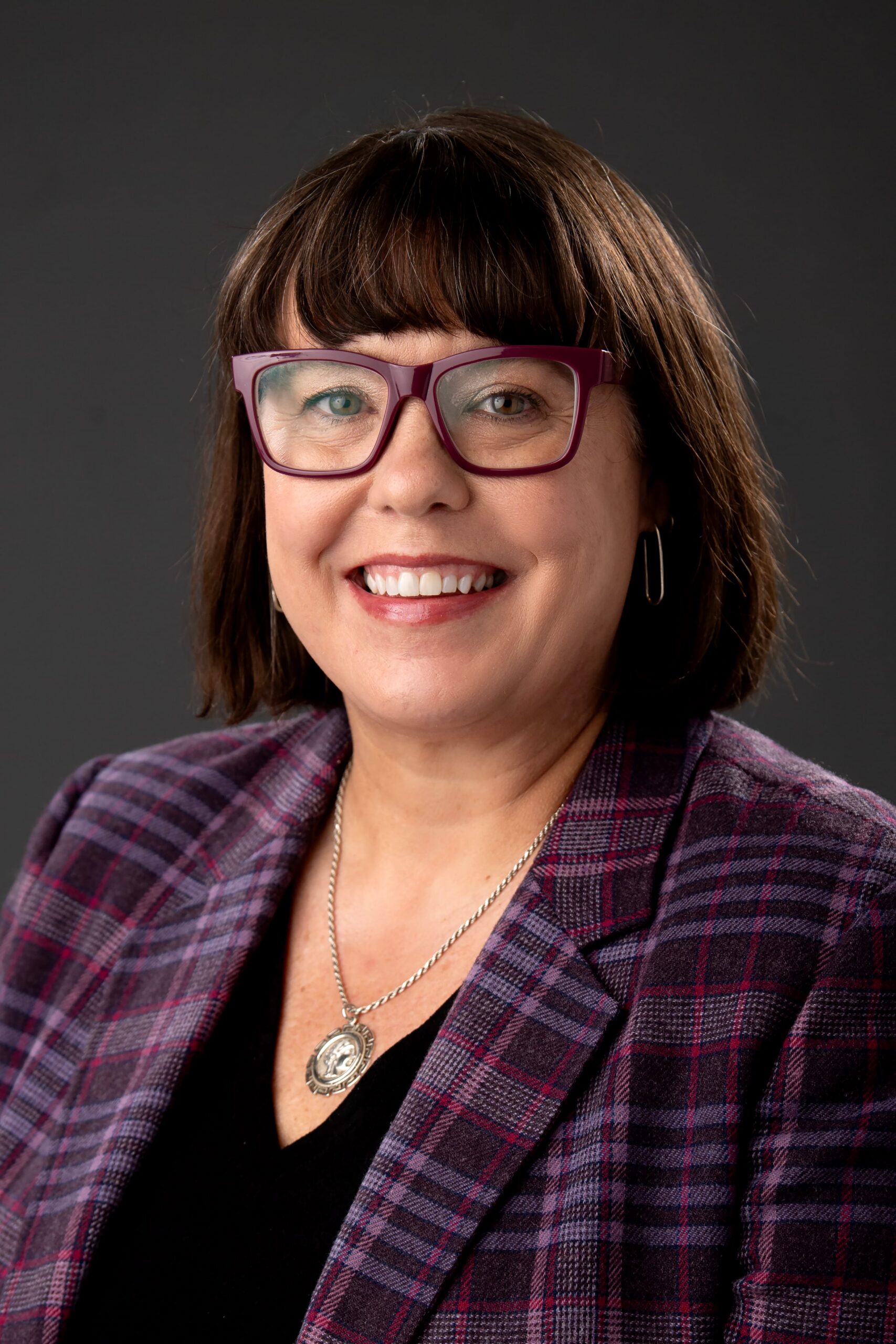
Kim Pennington, PhD
Norman, Oklahoma
Making Oklahoma brings together hundreds of archival images from the Oklahoma Historical Society, new maps, and sixteen chapters with a focus on modern Oklahoma.
Hello Students!
Within the pages of this incredible book are stories. That’s what history is when you boil it down. It’s the story of us. The people you will read about are much like you and me. They had good days and bad days. Sometimes they solved problems and sometimes they were frustrated. They had families and they experienced loss. They took calculated risks and they threw caution to the wind. When they started something new, they had no idea how it would turn out in the end.
The reason we study history and we learn their stories is because they contain the wisdom we need for our place and time. Within these pages lies the key to understanding where we come from, who we are, and more importantly, who we should strive to be. Authentic history education is not the memorization of dates, names, and places. Instead, it is the quest to understand and to become a better version of ourselves. Enjoy the journey!
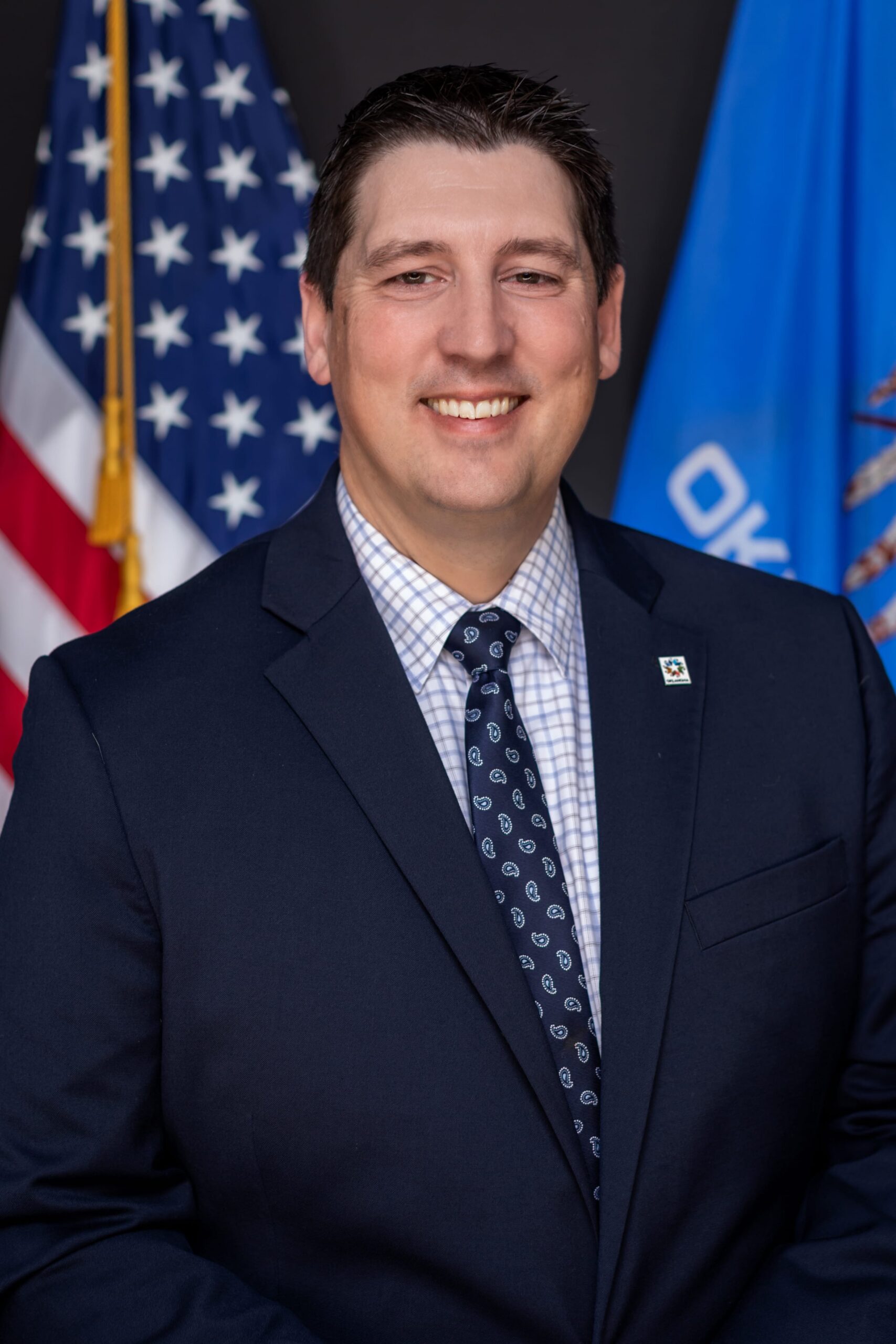
Trait Thompson, Executive Director, Oklahoma Historical Society
Advisory Board Members
-
Peter Brown
PK-12 Social Studies Coordinator,
Oklahoma City Public Schools -
Kevin Burlison
Westmoore High School
-
David C. Burton
Social Studies Curriculum Coordinator,
Moore Public Schools -
Amanda Deemer
Southmoore High School
US History -
Midge Dellinger (Muscogee Nation)
Oral Historian, Historic and Cultural Preservation Department,
Muscogee (Creek) Nation -
Molly Dettmann
Teacher Librarian,
Norman North High School -
Sarah A. Dumas
Deputy Director of the Oklahoma History Center Museum and Oklahoma National History Day State Coordinator, Oklahoma Historical Society
-
Eric Harp
Social Studies Content Specialist, Bartlesville High School, and President, Oklahoma Council for History Education
-
Adrienne Lalli Hills (Wyandotte Nation)
Director for Learning and Community Engagement,
First Americans Museum -
Chad Long
Oklahoma history teacher,
Mustang High School -
Garron Park
Southeast High School,
Oklahoma City Public Schools -
Melinda Parks, NBCT
Social Studies Teacher,
Westmoore High School -
Travis Pool
Assistant Principal and Supervisor of Social Studies Department,
Lawton High School -
Elizabeth Rogers
Secondary Social Studies Content Specialist,
Edmond Public Schools -
Dalton Savage
Education Coordinator, National Council for History Education, former Oklahoma history teacher, Edmond Memorial High School, and Past President of the Oklahoma Council for History Education
-
Eric D. Singleton, PhD
Curator of Native American Art and Ethnology, National Cowboy & Western Heritage Museum
-
Amanda Westenberg Soliván
Holland Hall, and former Social Studies Content Manager, Tulsa Public Schools
-
Joy D’Ann Tucker
Guest Curatorial Research Associate,
Oklahoma Contemporary Arts Center -
Destiny Warrior
National Council for History Education, Oklahoma City Education Research Alliance,
Oklahoma City Public Schools -
Rachel Watson (Citizen Band Potawatomi)
Department of Education,
Citizen Potawatomi Nation
Acknowledgments
Making Oklahoma: A History is guided by the expertise of our advisory board. The individuals who serve on the board were always available to discuss content, the Oklahoma Academic Standards, and share their expertise with us. A special thank you to Kim Pennington, PhD, Professor of Educational Sciences, Foundations, and Research, and Assistant Dean in the College of Education and Professional Studies at the University of Central Oklahoma, for the ancillary materials and insights she brought to this project. Thank you, Brad Watkins, PhD, Professor of Geography at the University of Oklahoma, for creating new maps for Making Oklahoma. We appreciate the helpful feedback we received from peer reviewers, including Jennifer Holland, PhD, Michelle McCargish, PhD, Brett Stokes, and Sunu Kodumthara, PhD. Thank you to Noël Ingram, PhD, an exceptional researcher and educator, who first introduced us to the importance of Lexile level and reader engagement in the early stages of the project. We also thank the Oklahoma State Department of Education, especially Brenda M. Beymer-Chapman, JD, Director of Social Studies Education, and the Oklahoma Council for History Education. We are grateful to Anne Hyde, PhD, for her support and encouragement.
Essential funding for design and implementation comes from Cameron University, Friends of the Oklahoma History Center, Kirkpatrick Family Fund, Lewis-Houghton Civics and Democracy Initiative, Library of Congress Teaching with Primary Sources Partner Program, National Council for History Education Great Plains Region, and the University of Central Oklahoma. Thank you to the incredible team at Ghost, especially Bethany Scott, Haley Sandell, Nick Robinson, Sarah Rogers, and Matthew Pickett, for designing such an innovative project for the people of Oklahoma.
The Oklahoma Historical Society (OHS) has been a steadfast partner in this project, and we appreciate the opportunity to feature many images from OHS collections. A special thank you to Trait Thompson, OHS Executive Director; former OHS Executive Director Bob Blackburn, PhD; and Chad Williams, OHS Director of the Research Division; and OHS board members Barbara Thompson and Jonita Mullins. Special thanks are also due to Saidy Herrera, Mallory Covington, Evelyn Moxley, Jim Meeks, and Carrie Fox at the Oklahoma Historical Society for sharing their expertise with us. In addition, we have also relied on hundreds of images and documents through the online repository Gateway to Oklahoma History and the Encyclopedia of Oklahoma History and Culture, both OHS projects. Colorful and engaging artworks from the Oklahoma State Capitol Arts Collection and the State Arts Collection managed by the Oklahoma Arts Council under the direction of Executive Director Amber Sharples, and the Oklahoma Supreme Court’s Judicial Art Collection, especially Justice Yvonne Kauger and photographer Neil Chapman, offer wonderful teaching and learning opportunities for students throughout the project’s sixteen chapters. Linda Lynn at the Oklahoman provided us with images to help us share stories from the recent past.
During the research and writing stages of the book project, we have hosted a series of teacher workshops at the National Cowboy & Western Heritage Museum, the First Americans Museum, and the Oklahoma Historical Society. We thank Gretchen Jeane, Director of Education and Special Projects, and John Lodge, School and Family Programs Coordinator, of the National Cowboy & Western Heritage Museum; Adrienne Lalli Hills (Wyandotte Nation citizen), Director of Learning and Community Engagement, First Americans Museum; Kathy Dickson, former Director of Museums and Historic Sites Division, and Elizabeth Bass, PhD, former Director of Publications, Oklahoma Historical Society; and Shelly Lemons, PhD, Professor of History at McKendree University. In addition, we have benefited from valuable discussions with colleagues at conferences including the Western History Association, Oklahoma Council for History Education, Oklahoma Research Day, and Berkshire Conference on Women’s History.
Academic administrators at the University of Central Oklahoma offered sustained support and encouragement for the project, especially funding for research assistants, through a series of grants from the Office of Research and Sponsored Programs at the University of Central Oklahoma. A special thank you to Todd G. Lamb, JD, President; Charlotte Simmons, PhD, Provost and Vice President for Academic Affairs; Greg Wilson, PhD, Assistant Vice President, Office of Research and Sponsored Programs; Gina Gordon, PhD, Director, Office of Research and Sponsored Programs; Elizabeth Maier, PhD, Dean, College of Liberal Arts; Marc Goulding, PhD, Chair, and Katrina Lacher, PhD, former Chair, Department of History and Geography, and colleagues Natalie Panther (Cherokee Nation), PhD, Associate Professor of History, and Chelsea Ball, PhD, Assistant Professor of History, and Maria Diaz Montejo, PhD, Lecturer. Research assistants from the University of Central Oklahoma included Tanner Cargill, Chrissy Carlson, Sandi Colby, Cait Clymer, Logan Flake, Ytzel Gonzalez, Lauryn Hunt, Esther Kim, Meghan Nguyen, Logan Ray, Maria Raygoza, Adison Simpson, Emma Stewart, and Benjamin Winterscheidt.
Cameron University provided important support for this project. We are deeply indebted to interim President Jari Askins. Her help and guidance made this project possible. She is a lifelong public servant from Duncan, Oklahoma, who has championed the importance of education throughout her career. President Shane Hunt, PhD, has also offered valuable support for this project. We thank him for his enthusiasm and commitment to improving the educational opportunities for Oklahoma students. We would also like to thank Vice President for Academic Affairs Marge Kingsley, PhD; Dean of the College of Arts and Sciences Lance Janda, PhD; Dean of the College of Graduate and Professional Studies Krystal Brue, PhD; and Chair of the Department of Social Sciences Edris Montalvo, PhD, for their support and for funding research assistants. Doug Catterall, PhD, and Travis Childs provided important encouragement and support as we worked to bring this project to fruition. We would also like to thank former Vice President for University Advancement Albert Johnson, Jr. for sharing his father’s stories, Chris Keller, PhD, for his help with images, and Chad Kirchen, former Principal of Lawton High School, for sharing his experiences with us. We thank Hope Cunningham and Ozias Diaz for their stellar work as research assistants on this project. We would also like to thank Heather Clemmer, PhD, Professor of History and Associate Vice President for Academic Affairs at Southern Nazarene University, for her feedback and support throughout the process of writing this book. We also offer special thanks to Sydney Janda. As a high school student, she read early drafts of many chapters and provided us with invaluable perspective and feedback.
We thank our students, colleagues, and families for their patience, support, and enthusiasm during all the stages of this collaborative Oklahoma history project. Our families, Lance and Sydney Janda, and Mike, Owen, and Bryce Logan, have been great sources of strength and support throughout the project’s development and publication.